
Starke County Busted Mugshot Records
A trip to the Starke County Justice Center starts a jail record. The sheriff's staff opens it at booking. One entry can hold a lot: booking number, name, admission time, arresting agency, charge listed at intake, bond, custody location, and a photograph. Knox Police, North Judson Police, Hamlet Police, Indiana State Police, or a joint unit might have made the arrest. It makes no difference. The sheriff keeps the booking record either way. The investigating agency holds the incident report, and the court clerk keeps any criminal case that follows. Knowing which office holds which paper saves real time. Pair a Starke County booking entry with the public court docket, because prosecutors can reword charges, file different counts, or decline to file a case at all, and courts can dismiss counts later on.
The figures come from the sheriff's 2025 annual report. Read them as operating totals. They measure activity, not verdicts. And since one person can be booked more than once, that person may show up in the counts more than once too.
Fields in Starke Booking Records
What a search shows depends on the live roster at that moment. Treat every field and photo as "where supplied." A 2015 launch report from the sheriff's site said the roster displayed booking photographs and charges, though interfaces change over time. Match several identifiers when a name is common. A face alone is never enough.
| Potential field | What it means |
|---|---|
| Full name | The jail's identifying name; check spelling and suffix. |
| Booking number and time | A jail transaction and admission point, not the incident or court filing time. |
| Booking photograph | An intake identification image where displayed, never proof of guilt. |
| Arresting agency | The agency credited with arrest or transport, which may differ from the jail custodian. |
| Charges | Charges recorded at intake; the prosecutor and court may change them. |
| Bond | A snapshot that can change after a court order and does not itself confirm release. |
| Status or location | A current custody detail that may change after release or transfer. |
| Court date or cause number | A bridge to MyCase when supplied; the booking number is not always the cause number. |
Note: A photo missing from a roster card does not show that the Justice Center never created an intake photograph.
Request Starke Busted Mugshot Files
Older bookings and people already released often drop out of JailTracker. The fix is the sheriff's Request for Production of Documents. Indiana's Access to Public Records Act asks that you describe an existing record with reasonable particularity. List the booking record and the booking photo as separate items. Include a full name, a booking or arrest date or a tight date range, the Justice Center, and any incident, case, or booking number you know.
- Check the live roster first and note every useful identifier.
- Complete the official form with requester contact details and a narrow event description.
- Ask for the booking or intake record and identification photograph in native electronic format.
- Send it by the form's listed mail, fax, or email route and retain a copy.
- Review any denial for its cited legal basis, or narrow an overly broad request.
5435 E. IN 8
Knox, IN 46534
574-772-3771
sheriff@starke.in.gov
The agency fills in the fee, the decision, release timing, and notice, since the form leaves those blank. Assume no fixed price and no fixed deadline. Under APRA, a mailed, faxed, or emailed request normally gets an acknowledgment within seven days. That acknowledgment is not a promise of the records themselves.
The sheriff's reports and permits page handles more than booking files. It also routes incident reports, accident reports, warrant searches, and other agency records. Keep the split in mind. The investigating police department holds its own report, while the Justice Center holds the jail intake file.
Indiana Busted Mugshot Law
Indiana Code 5-14-3 controls access to public agency records and mixes required exceptions with discretionary ones. Indiana has no broad, separate booking-photo or anti-pay-to-remove statute. Adult expungement falls under Indiana Code 35-38-9, and Indiana Code 24-4-18 sets duties for criminal-history providers once an expungement happens. Read each order closely. Its effect depends on the type of case and the type of order.
Juvenile records carry their own rules under Indiana Code 31-39, which keeps them confidential with exceptions. Turning eighteen does not erase them. The state publishes juvenile expungement information and forms. Court Access Rule 5 bars public access to confidential, sealed, and expunged cases and shields certain personal data. A sheriff can also redact medical details, victim information, security-sensitive facts, and other exempt material.
For unofficial copies, start with a publisher's own no-fee correction or removal route when one is stated. Busted Newspaper says its form takes sealed, expunged, dismissed, not-guilty, and similar documented outcomes without charge. Recently Booked posts a no-fee policy for listed errors and case outcomes. Mugshots.com calls its record-maintenance process free for qualifying grounds. Arrests.org offered no clear free procedure, and the local Mugshots.zone route was intermittent. Never pay because someone promises guaranteed deletion. Avoid linking any paid removal vendor.
Old Starke Arrest Photo Archives
A photo staying online has nothing to do with how long the record survives. Indiana's county public-safety retention schedule puts adult intake, booking, transfer, release, arrest-card, court, extradition, and notification material into a custody-file series. Destruction comes ten years after incarceration ends. The schedule never names booking photographs on their own. A photo inside that file may fall under the series, but the sheriff or the Indiana Archives and Records Administration should confirm the classification.
Other records run on other clocks. Arrestee fingerprints are permanent under their series. Daily bulletins can be destroyed after one year, and some serious felony investigative files are permanent. County jail files do not drift to the State Archives on their own. Begin with a narrowly dated sheriff request. Historical state-prison material follows a separate path and may transfer from IDOC roughly ten years after release or death.
The Indiana Archives correction holdings page notes that older prisoner packets or admission cards sometimes hold photographs. No image is guaranteed.
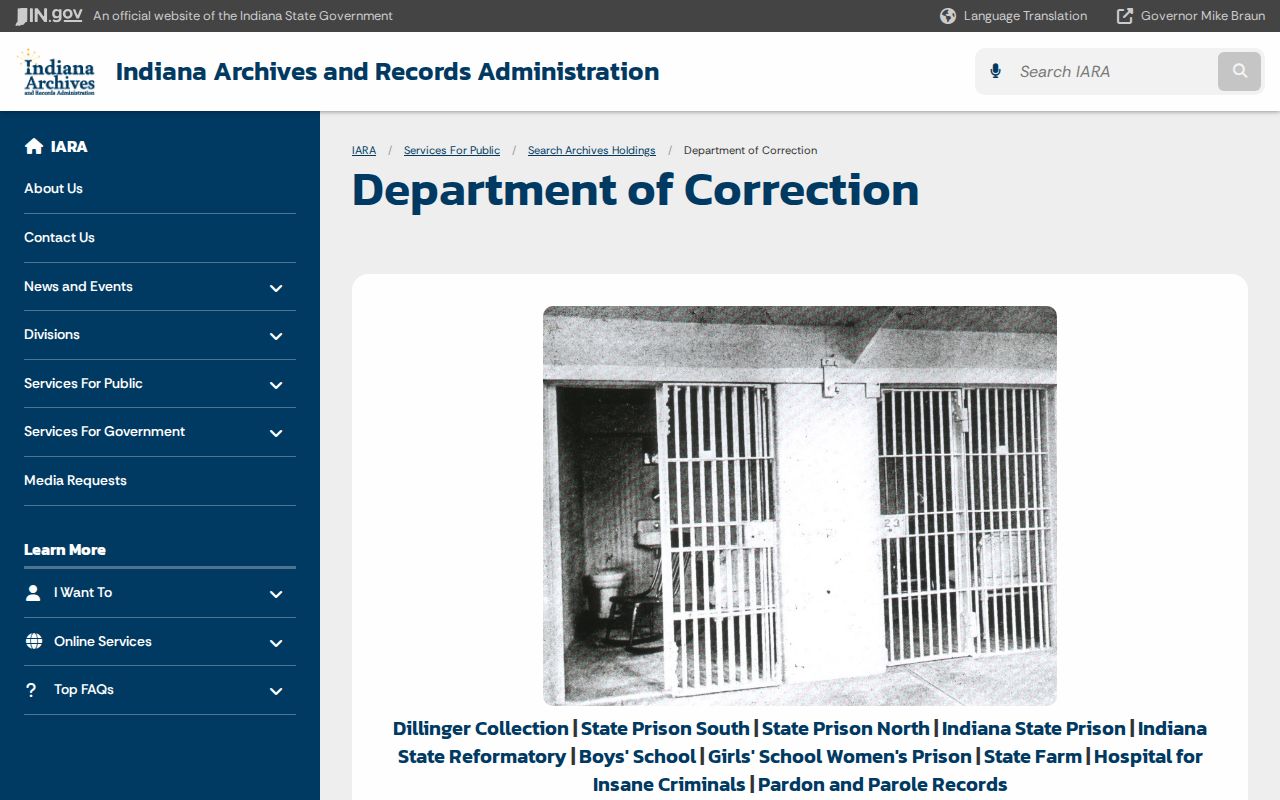
That archive is for historical state correction records, not every old Justice Center booking.
Find Starke County Busted Mugshots
Match the tool to where the person actually is. A search that works at one custody stage will miss others entirely. Think a local jail stay is likely? Go to the sheriff first. Was the person maybe already released? Use the records request form instead. Once a case reaches a judge, MyCase shows what the prosecutor and court did with it. No single database ties everything together. It can't span an incident report, current custody, an old booking, a court file, state prison, and federal detention all at once. Matching the source to the stage saves a lot of dead ends.
- Open the sheriff-linked JailTracker for a current Justice Center custody check.
- Confirm the name, admission date, and a second identifier where available.
- For an older or missing booking, request the intake record and photo from the sheriff.
- Search MyCase by cause number or carefully verified name for the filed case and disposition.
- Use IDOC only for state correction custody, SAVIN for custody-change notices, and the relevant federal locator when federal custody is possible.
An empty roster result does not close the book. Several situations produce no listing. The person may have gotten a citation instead of a booking. A hospital trip, juvenile handling, a transfer out, release before county admission, or a booking in a different county altogether can all hide someone too. All an empty search proves is simple. One interface returned nothing at that moment.
Where Starke Busted Mugshots Appear
Start with official records every time. Third-party county pages can help you find a name. Their listings lag reality, though. An entry may linger long after a release. It may skip a correction or freeze an old charge in place. A timestamp on a private site proves nothing about who the sheriff still holds.
| Channel | Photo status | Use |
|---|---|---|
| Sheriff-linked JailTracker | Historically reported; verify current cards | Official current Justice Center custody |
| Sheriff records request | Request the intake image | Official older or released booking file |
| IDOC locator | Do not promise every profile has one | State correction custody, not county intake |
| Indiana MyCase | Not a mugshot source | Filed charge, orders, and disposition |
| Busted Newspaper | Unofficial photos | Discovery only; verify with sheriff and court |
| Recently Booked | Unofficial cards | Claims a 30-day view; not a custody authority |
| Mugshots.com | Unofficial archive | Visible local archive chiefly from 2013 through 2019 |
| Arrests.org | Unofficial photos | Discovery only; labels may be stale or wrong |
| Mugshots.zone | Unofficial photos | Reverse-date cards; verify every fact |
The captured Recently Booked Starke page illustrates how a commercial page presents public-source cards.
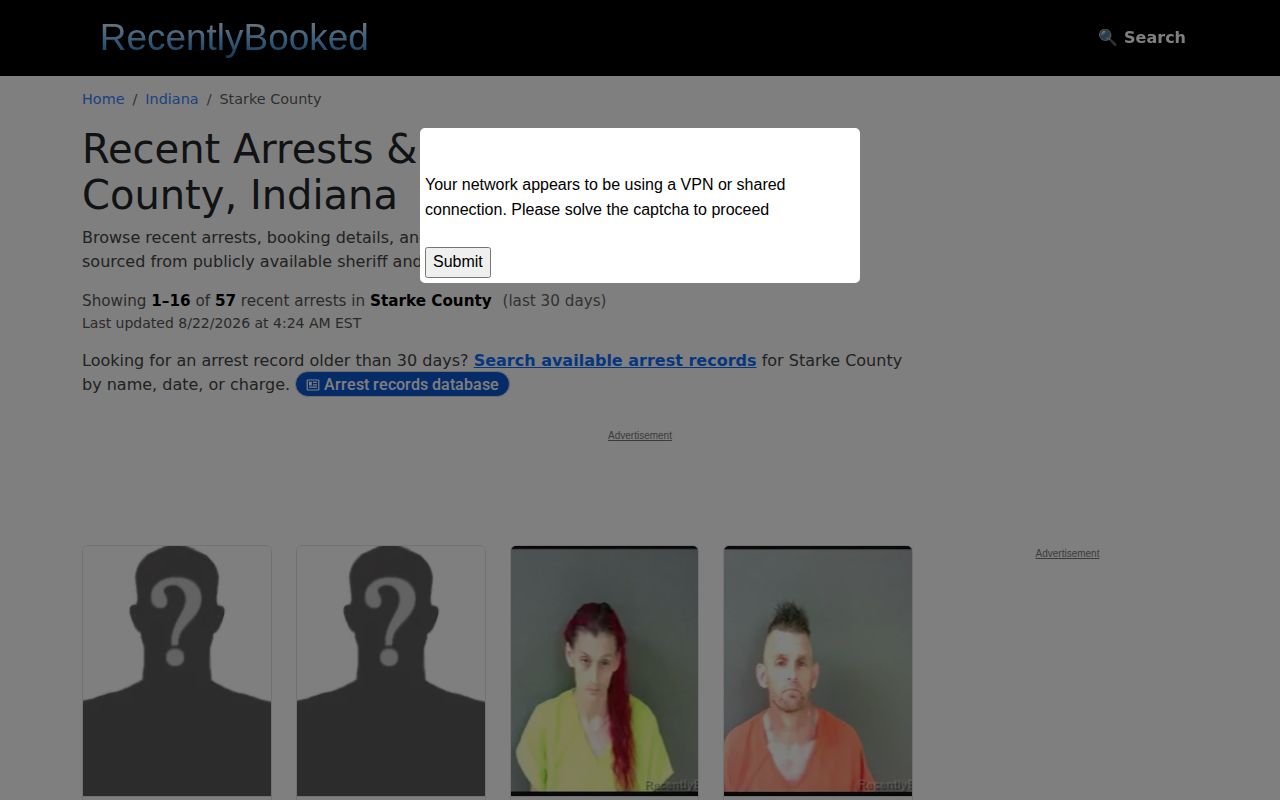
No matter how often a third-party page claims to refresh, it is not the official roster. Treat it as a lead, not the real thing.
Starke Busted Jail Roster Search
The official sheriff jail page links out to a JailTracker application branded for Starke County. WKVI describes it as the current list of people held in the Justice Center. That wording defines the tool's limits. It is a present-custody roster, not a roundup of everyone arrested this week. Entries appear and disappear for many reasons. Admissions, releases, transfers, court paperwork, identity review, outages, and ordinary processing delays all play a part.
The sheriff promises no fixed update schedule. Calling the roster real time would overstate things. Use whatever search controls the live interface shows, then read the details it returns, including full name, booking date, agency, status, charge, bond, and photo where supplied. Keep two numbers straight. A booking number tags the jail event; a cause number tags the court case.
You can reach the gateway directly through this Starke County Sheriff's Office capture.
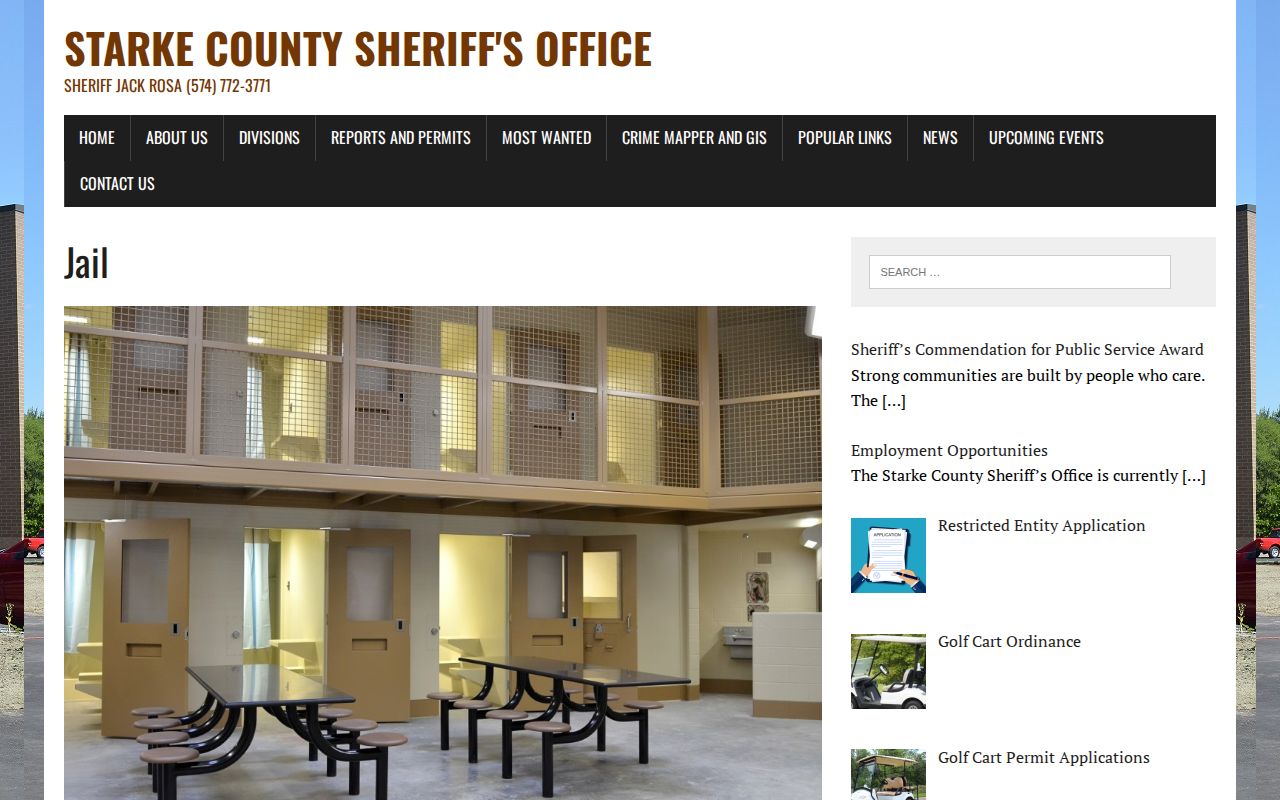
The agency page stays the official route even when the JavaScript roster loads slowly or not at all. As for apps, the sheriff offers no dedicated jail-information one. TextMyGov handles community messages. The anonymous line and Knox tip411 collect tips, and SAVIN sends custody-change alerts. None of these will show a mugshot.
Recent Starke Busted Booking Windows
Starke County has no official feed for same-day, 24-hour, 48-hour, 72-hour, or seven-day bookings. JailTracker shows current custody only. That gap bites hardest after a fast release. Someone booked and freed earlier in the week may be gone from the list before you ever search the name. The sheriff's news archive does not help here. It offers no booking blotter and no archive of people released.
WKVI publishes a dated weekly sheriff activity report. It covers calls and incidents. The "Arrests" line, though, just sends readers back to the current Justice Center roster. So it is not a booking list and not a photo gallery. For a specific dated event, read the report for context. Then ask the arresting agency for its incident report and the sheriff for the intake file. Weekends and holidays can slow processing, and no local source promises a weekend posting schedule.
Note: A blank roster result cannot answer whether a person was booked and released before the search.
Starke Arrest Release Alerts
Indiana SAVIN spans all 92 counties and can notify registered users about placement, release, transfer, and other custody changes. The state calls it free and available around the clock. Prefer the phone? Registration also works at 1-866-891-0330. SAVIN answers the question of when someone's custody status changes; it is not a court record, and it displays no mugshot gallery.
Each tool answers one question. JailTracker lists the current Justice Center roster. SAVIN sends custody-change notices. MyCase carries public court events and outcomes. The sheriff and police tip channels pass information to law enforcement. Mix them up and you can draw a false conclusion.
Starke Arrests in IDOC Custody
The Indiana Department of Correction Offender Locator covers state custody, which usually follows a sentence or placement. Search by last name, first name, or DOC number. The number is the strongest key. Names shift, and they collide. Skip IDOC for someone just arrested, held in local pretrial custody, released, or never placed in the state system.
Photos vary by result, so an image is not promised for every match. When the locator lacks the picture you need, the IDOC records request page is the official fallback. Name the person and the DOC number. Describe the offender identification or intake photograph you want, and state your preferred electronic format. The official route appears in this IDOC offender search capture.
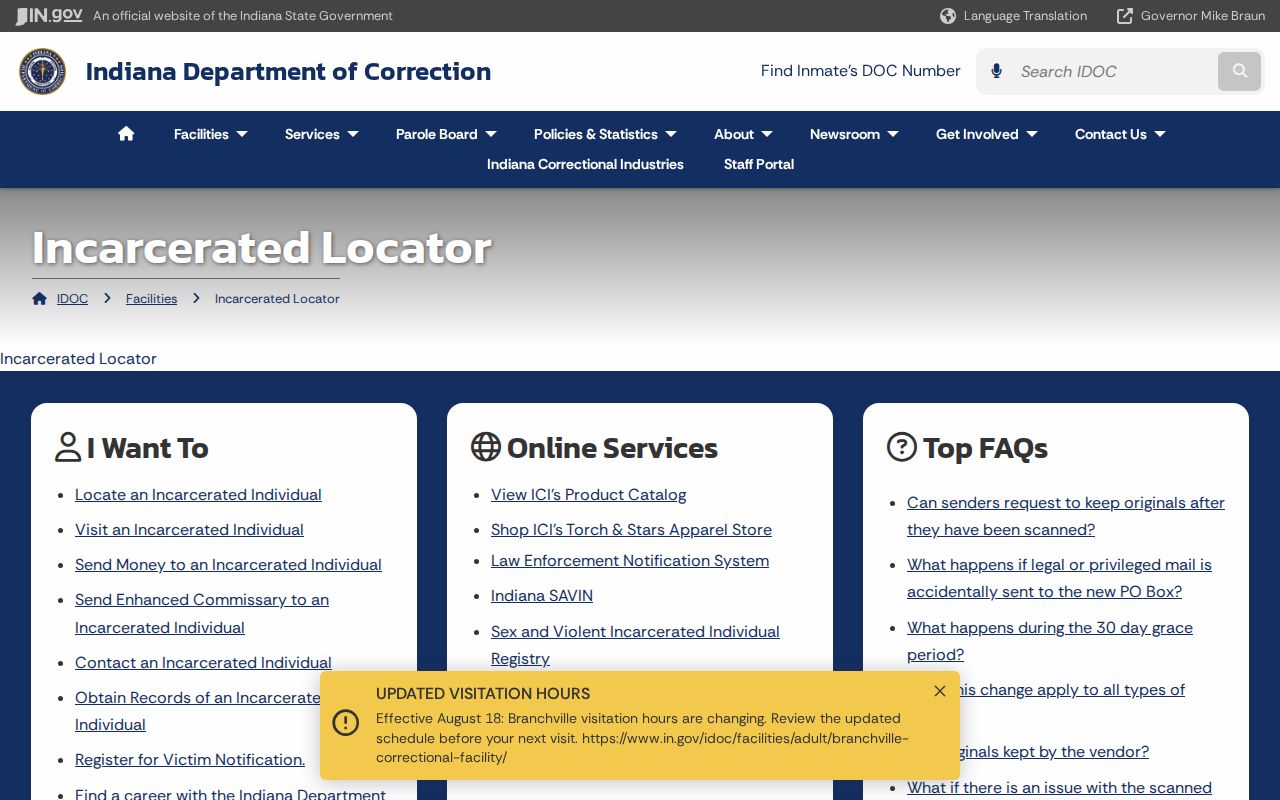
IDOC reflects a later custody stage than the county roster. It is not a local booking feed, and it should never be presented as one.
Starke Booking Custody Stages
A person's record moves between custodians as the case develops. The comparison below keeps the current roster, the retained booking record, the state locator, and the federal systems each in their proper lane.
| Custody stage | Best source | What it answers |
|---|---|---|
| Just booked or locally held | Starke JailTracker | Current Justice Center listing and fields supplied now |
| Released or transferred | Sheriff records request | Retained intake record and photograph where disclosable |
| Case filed | MyCase or Starke clerk | Charges filed, hearings, orders, and final disposition |
| State correction custody | IDOC locator | State offender identity and custody information |
| Federal sentence | BOP locator | Federal prisoners from 1982 forward; no public photo field |
| Covered immigration custody | ICE ODLS | Location or status, not a booking photograph |
The U.S. Marshals Service keeps no public prisoner gallery or locator. Its published policy generally withholds federal booking photos on privacy grounds. Do not confuse a federal or immigration search with a Starke County jail search.
Starke Busted Charges in Court
Want to know what happened after a busted arrest in Starke County? The Starke County courts page connects to Indiana MyCase, the state's online case system. Search by cause number or citation number if you have one. A name search works too, though common spellings can slow you down. The Chronological Case Summary walks through the whole life of a case: the first filing, hearings, bond orders, amendments, motions, a dismissal, a plea, trial, judgment, and sentence. Some papers online are limited. The clerk keeps the official record.
A booking and a court file tell two different stories. The jail logs the charge as it came in. The prosecutor then decides whether to file anything at all. The judge settles whatever counts get filed. No public case showing up? The reasons vary. Processing may lag, a name may be spelled another way, the matter may sit in a different court, nothing was filed, or the record is sealed or expunged. Silence alone tells you nothing.
Busted Mugshots Across Starke Cities
Knox, North Judson, and Hamlet each run a local police agency. None had a verified official city arrest log or daily booking feed. When a local arrest ends in admission at the Starke County Justice Center, the sheriff creates the county booking record no matter which department made the arrest. For an incident or arrest report, the city police department remains the place to ask.
- Knox Busted Mugshots covers Knox City Police records, tip411, and county booking.
- North Judson Busted Mugshots covers the town police or marshal record and Justice Center path.
- Hamlet Police records and county booking follow the same custodian split for Hamlet arrests.
WKVI's weekly reports can add dated context from any of the three towns. A multiagency Major Crimes Unit inquiry may create records at several departments at once. The agency named in the report controls where an investigative-record request should go.
Public Record Search
Sponsored Results